Intro to Sinatra (the Ruby web framework) Episode 1
Some time ago, I wanted to make a web application. I had been learning Python, my first programming language, for about 3 months. I had followed a course on Django, but found it difficult to manage on my own. Looking for something easier, I found Flask, but still struggled with setting up my simple app. Then came Bottle, which had the required simplicity for someone learning programming, http requests, and basic CRUD operations all at the same time. I am not unhappy with the result.
Then my Python courses started talking about object-oriented programming (OOP). While researching the notion, I saw that this language called Ruby was exclusively built for OOP, and thought I’d give it a try. Six months later, I’m mostly picking Ruby over Python when I want to have fun, and I’m looking for a web framework, again.
Have you heard about Rails? It seems to have become so popular, some years ago, that people knew “Ruby on Rails” before Ruby itself. That was before my time, though. As a Ruby newbie, I’m looking for something as simple as Bottle was in Python, which does well enough the things that I need to do. So here I am trying Sinatra.
The first thing I see, that’s similar to Bottle, is a simple way to define routes. In my main file, all I need to do is:
1) ruby
require 'sinatra'
2) define my route such as:
  get '/' do
    'something'
   end
This simple example states that for a GET request sent to the root URL, the string ‘something’ will be sent to the browser and rendered.
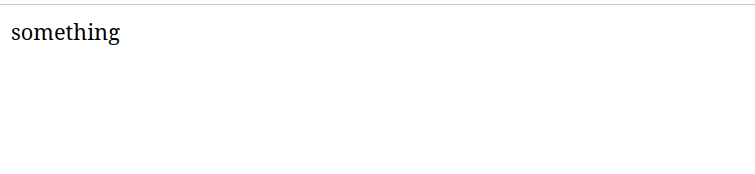
Equally simply, I can provide an erb template and define the route as
get '/' do
    erb :menu
end
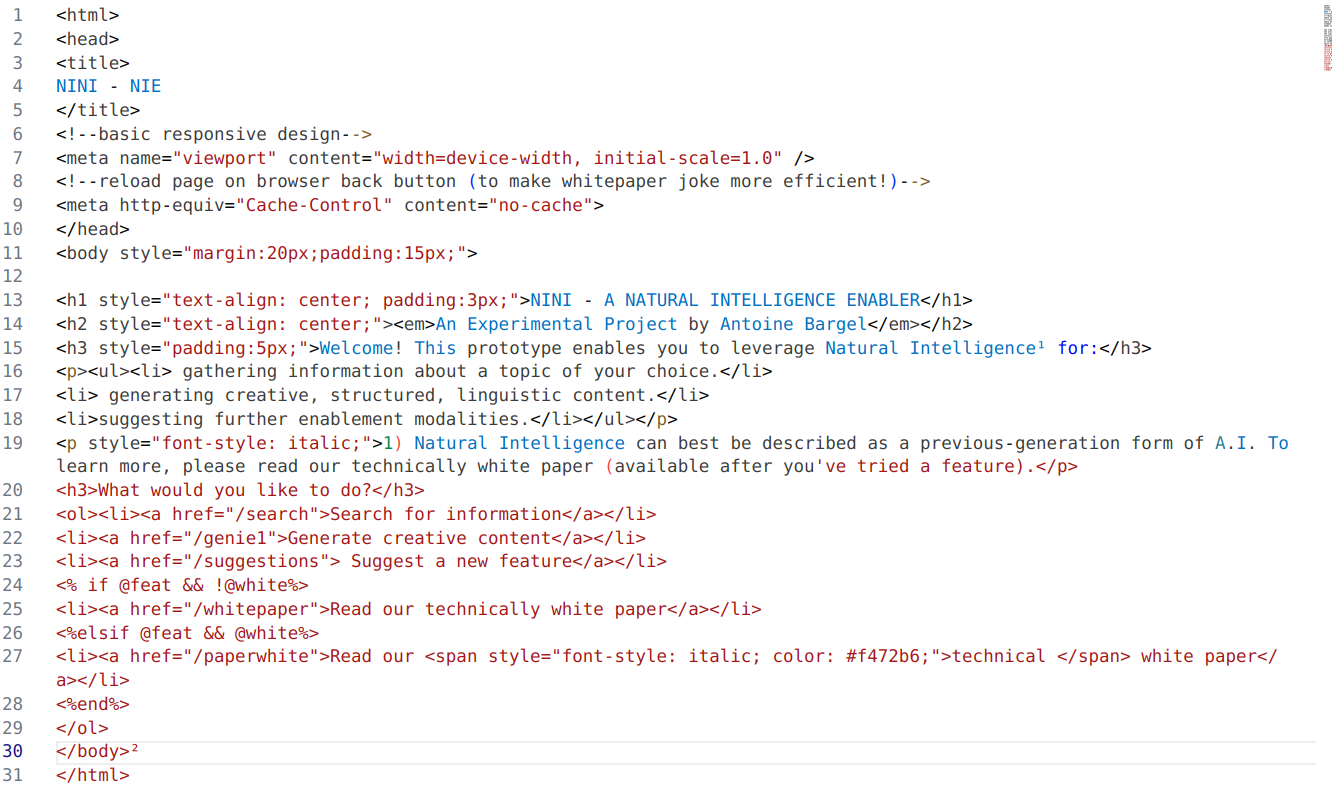
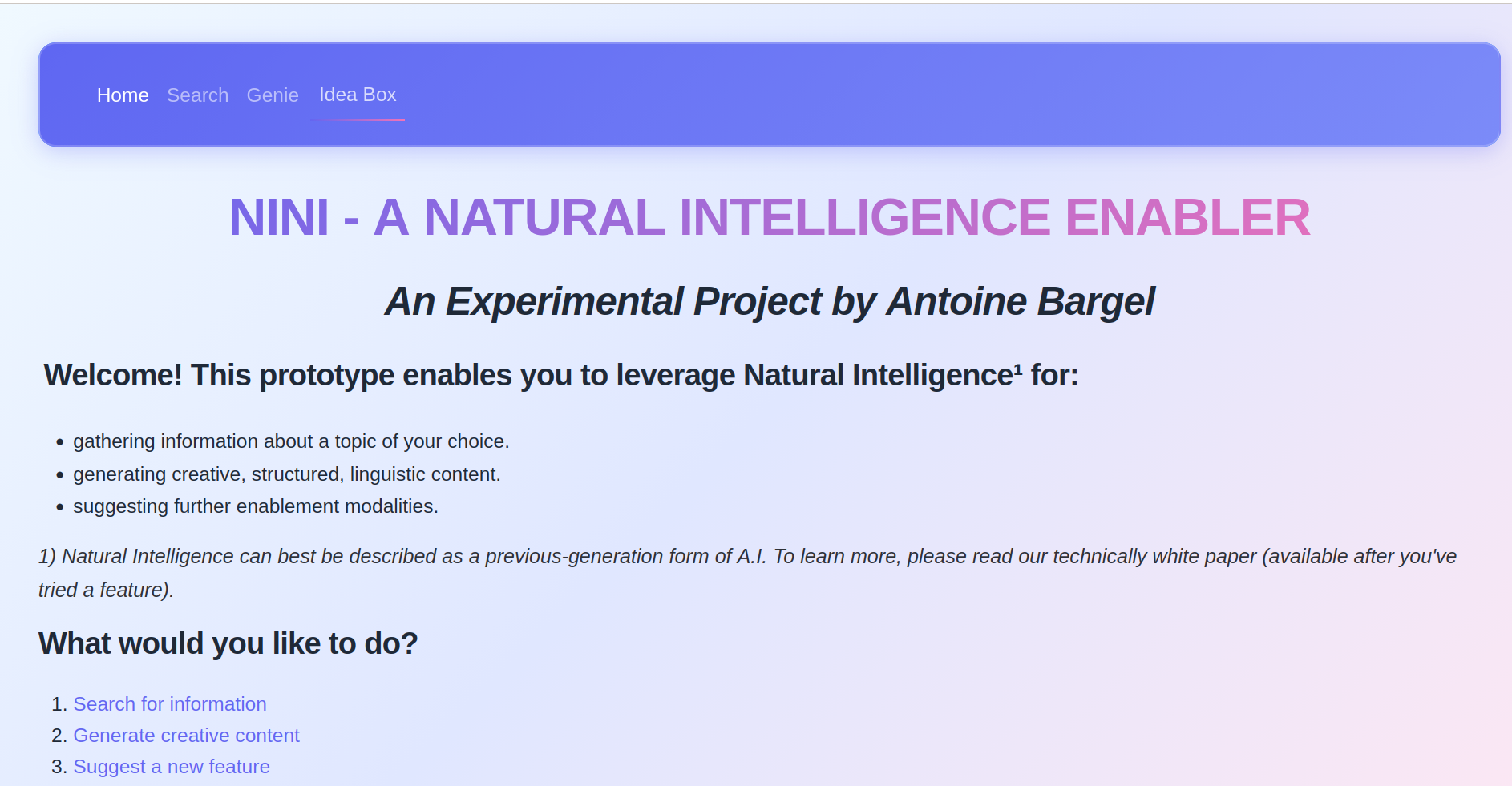
which ends up rendering my menu.erb template:
Template
Rendered page (including CSS file)
So far, so good, Sinatra has really provided as straightforward an experience as Bottle. We’ve just rendered a template, though. In the next episode, we’ll try to have some kind of computation happen toward our request.